As a dedicated battle royale player, I've seen the landscape shift dramatically over the past few years. Looking back to 2026, the whole saga of PUBG's transformation in China remains one of the most fascinating chapters in gaming history. It was a real eye-opener, showing how cultural and regulatory forces can reshape a global gaming phenomenon overnight. I remember when the news hit: Tencent had to pull the plug on the original PUBG for millions of us in China because the government wouldn't grant that all-important license for monetization. Talk about a game-changer! One day we were dropping into Erangel, the next we were facing a completely different, yet eerily familiar, battlefield.
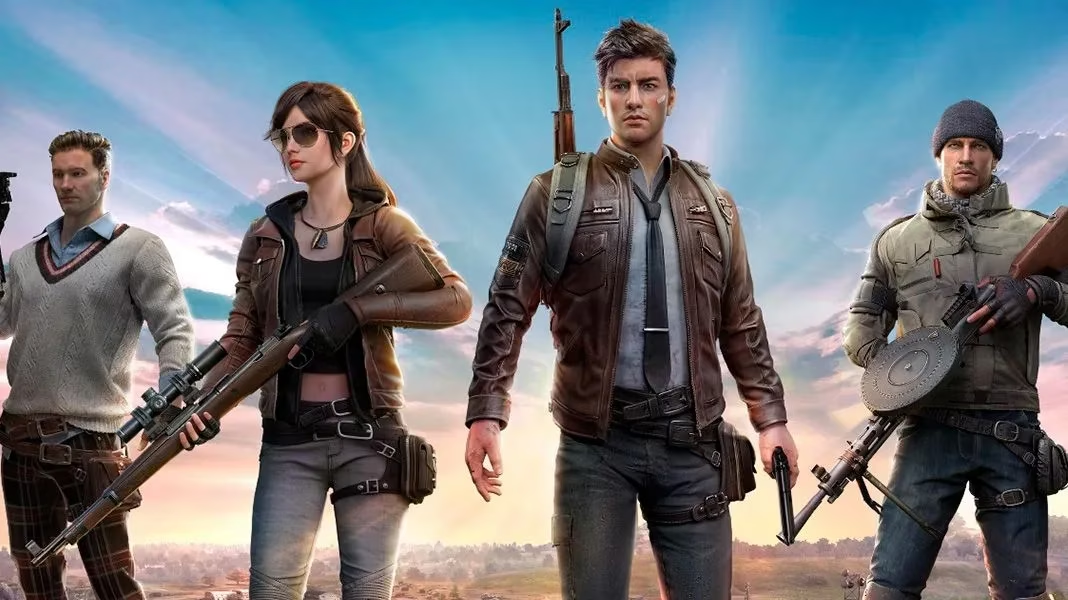
The transition to Game For Peace was, frankly, surreal. At its core, the gameplay loop was still that addictive, heart-pounding battle royale experience we all loved. The maps, the weapons, the loot—it was all there. But the devil, as they say, was in the details. The most jarring difference for me and my squad was the death animation. Gone was the brutal, sudden collapse of PUBG. Instead, defeated players would politely... wave goodbye before gracefully disappearing. My teammates and I would just look at each other and go, 'Well, that's a thing.' It was so bizarre it became a meme within our Discord server overnight. We'd shout 'Friendly wave!' every time we got a knock. 😅
Here’s a quick breakdown of the key visual changes that defined the early Game For Peace experience for us pros:
| Gameplay Element | PUBG (Global) | Game For Peace (China) | My Personal Take |
|---|---|---|---|
| Death Animation | Ragdoll physics, blood splatter | Waving goodbye, clean disappearance | 'Wholesome' but hilarious. Lost the gritty tension. |
| Blood & Gore | Visible blood spatter on hits and surfaces | No blood; hit markers are green/colorful | Made gunfights feel oddly clean, like laser tag. |
| Thematic Tone | Militaristic, survivalist | Patriotic, 'anti-terrorist' training exercise | The loading screens felt like a PSA sometimes. |
Beyond the visuals, the entire narrative framing shifted. Tencent marketed it not as a fight for survival, but as a 'tribute to the blue sky warriors' protecting China's airspace. Every match felt like a state-sanctioned training exercise. It was a masterclass in rebranding for compliance. As a player, you had to admire the sheer audacity of it while adapting your mindset. We weren't criminals or soldiers of fortune anymore; we were... patriotic trainees? It was a weird cognitive dissonance to manage mid-game.
This wasn't PUBG's first rodeo with regulatory hurdles, of course. I followed the news when it got banned in Nepal and parts of India. But the China situation was different—it wasn't a ban, it was a metamorphosis. Tencent saw that massive player base and potential revenue (we're talking billions, no joke!) and engineered a perfect clone that could pass government muster. From a pure business perspective, you gotta hand it to them—it was a genius, if cynical, move. They turned a problem into a solution, literally creating 'Peace' from the ashes of 'Battlegrounds.'
Fast forward to 2026, and the legacy of this move is still felt. Game For Peace evolved, sure. The waving animations became slightly less goofy, the patriotic themes got more seamlessly woven into seasonal narratives, and the monetization engine they finally got to run is, frankly, next-level. It's its own beast now. Meanwhile, the global PUBG scene marched on, but always with that shadow. Brendan Greene, the creator himself, said he was done with the genre. That hit hard for us old-school fans. No PUBG 2? Seriously? It felt like the original vision had splintered: one path led to a sanitized, hyper-monetized version in the world's largest market, and the other path... well, it kind of just plateaued.
Playing both ecosystems over the years gave me a unique perspective. Here’s what I think the whole saga taught us about the future of online gaming:
-
Adaptability is King: Games are no longer static products; they are services that must adapt to legal and cultural climates. Game For Peace is the ultimate example of this.
-
The 'Localization' Extreme: What started as translating text and changing a few assets can now mean completely overhauling a game's core themes and imagery to meet local standards.
-
The Player's Pivot: We, the players, are incredibly resilient. We'll grumble, meme, and laugh about the changes, but if the core gameplay is tight, we'll adapt and keep playing. The thrill of that chicken dinner (or whatever they call the victory screen in Peace) is universal.
So, where does that leave a battle royale veteran like me in 2026? With a weird sense of nostalgia for the gritty, unapologetic chaos of the early PUBG days, but also with a respect for the sheer survival instinct Game For Peace displayed. It's a reminder that in the gaming industry, you sometimes have to play a different game altogether to stay in the game. It’s a whole new meta, and honestly? I'm still here for it. The core loop—that adrenaline rush of being the last one standing—transcends even the friendliest of death waves. GG, peace out! ✌️
Comments