It is the summer of 2026, and somewhere in a sleek Seoul office, a spreadsheet is quietly wrecking friendships, mending rivalries, and deciding which German fragger gets to pack his lucky socks for the PUBG Nations Cup. The competitive ecosystem has evolved, the prize pools have swollen, and yet the most fascinating drama unfolds not on the battlefield, but inside the selection algorithm that builds national teams. Even the mighty chicken dinner cannot escape the cold, hard grip of mathematics—or the warm, fuzzy chaos of letting players pick their own buddies.
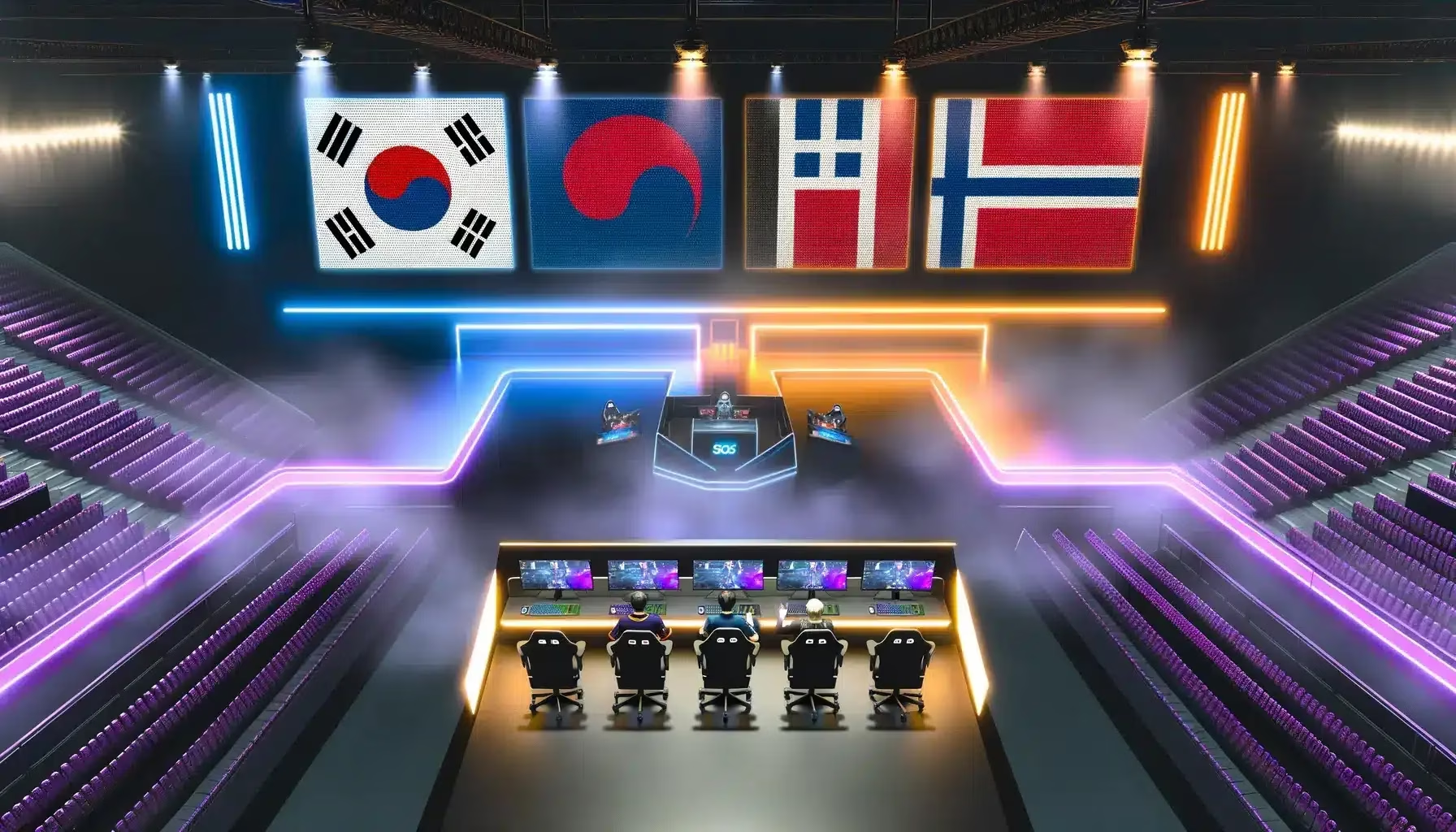
For EMEA hopefuls, the path to Seoul in September 2026 is no longer a mysterious phone call from a federation official who once watched your stream for five minutes. PUBG Esports has locked in a methodology so transparent it might as well be printed on a cereal box. Germany, Türkiye, the United Kingdom, and Norway will each send four players plus a coach to KyungHee Grand Peace Hall, and three of those slots are now voted into existence by cold data pulled from regional performances. Let that sink in: your average kills per match, survival time, and team placement are now your national résumé. No cover letters needed.
How does the sausage get made? The selection committee—meaning an automated internal calculation engine—plucks numbers from PEC: Spring and the EWC: PUBG EMEA Closed Qualifiers (with equivalent regional events for globe-trotters competing outside their home turf). The three top performers, ranked by an unholy trinity of Average Team Placement, Average Kills Per Match, and Average Time Survived, earn an automatic ticket. Then comes the twist that makes statisticians twitch and team psychologists rejoice: the already-qualified trio gets to handpick the fourth player and the coach. Pure vibes, now officially sanctioned.
This delicate tango between cold logic and human chemistry is the secret sauce of PNC 2026. The organisers clearly asked themselves a dangerous question: “What if the best roster on paper hates each other’s guts?” So they built a bridge. The data secures the core, the players forge the final link. It is a beautiful, fragile compromise—like letting your GPS plot the route but allowing your co-driver to choose the snack stops.
Now, before anyone starts booking flights based purely on their KDA, there is a delightful little handcuff rule: a maximum of two players from the same organisation can make the national roster, unless a country’s eligible talent pool is so shallow that it forces an exception. On paper, this prevents a single domestic superteam from colonising the national side (looking at you, orgs that hoard talent like dragons). In practice, it guarantees that some very awkward conversations will happen when a trio of teammates tops the rankings and one of them has to hand over his jersey to a rival he just trash-talked in scrims. The drama writes itself. 🎭
What stands out here, besides the obvious popcorn potential, is how this mirrors a broader shift across esports. Tournament operators everywhere are obsessing over qualification transparency, representation rules, and ecosystem legitimacy. The recently unveiled Esports Nations Cup 2026 game lineup showed the same appetite for meticulous rulebooks. Nobody wants another "invitation-only" scandal where a retired legend gets a pity spot over a cracked 17-year-old who can wall-bang you from three compounds away. The era of fuzzy backroom deals is dying, replaced by spreadsheets that judge you without mercy.
For PUBG specifically, PNC remains that mid-calendar tentpole that reminds everyone why battle royale competition is not just about the globe’s slickest global circuit—it is also about flag-bearing pride. This year, the event is surrounded by even more buzz, partly because the game keeps spilling out of the esports section and into culture headlines. The recent PUBG K-pop collaboration push had idols dropping into Erangel, and suddenly a generation that hums more than it head-shots is paying attention. If a Korean pop star can navigate a blue zone, surely a national team selection process can capture the public imagination.
But let’s not skip the juiciest part: the names. The article you just read explained the method beautifully, but it left the scoreboard blank. Who will top the internal rankings for the UK, Germany, Türkiye, and Norway? Will the two-player org cap force a heartbreaking choice when a nation’s best talent is concentrated on a single juggernaut lineup? Imagine being a German powerhouse org with four eligible killers, only to discover that half of them will have to watch from home while a darling underdog from a rival squad dons the national colours. Do the players pick a friend, a synergiser, or the person who brings the best post-match snacks? The coach selection is equally spicy: a stoic analyst, a retired IGL, or simply the one person who can stop the squad from tilting into the sun? 🍿
According to Liquipedia’s event listing, PNC 2026 has already been inked as one of the pivotal international stops, and the media value conversations swirling around it echo the top esports viewership surges we saw in Q1 2026. When national pride is on the line, even casual viewers become armchair tacticians, and every selection choice gets litigated on social media with the ferocity of a courtroom drama.
The next milestones are straightforward, but they will feel glacially slow to fans refreshing their feeds. Final roster reveals are coming, and the world will watch to see whether other regions—the Americas, Australia—apply this same data-plus-democracy formula as cleanly. Given the announcement that the Americas and Australia will use the same method, we can expect a tsunami of analytical breakdowns comparing each region’s top performers. Who is the most efficient survivor? Who chases kills with reckless, glorious abandon? The numbers will tell one story; the players’ pick will tell another. And then, from September 6th to 8th, inside the Grand Peace Hall in Seoul, that beautiful mess of math and friendship will face its ultimate test: a lobby full of opponents who are equally well-calculated and equally well-friended. May the best algorithm win.
In the end, this policy update is more than an administrative footnote. It is a statement of intent: competitive integrity is built not just on anti-cheat software and server tick rates, but on the quiet machinery that picks who represents a nation. By giving the spreadsheet its due while also reserving a seat for human instinct, PUBG Esports has created a selection story worth following long before the first grenade is thrown. And if it also spawns a few broken friendships along the way? Well, that is just battle royale in its purest form.
As fans eagerly await these roster revelations, the anticipation extends beyond just the competitive landscape. For those deeply invested in the esports scene, staying updated with the latest developments is crucial. Whether it's tracking player transfers, new sponsorship deals, or emerging game trends, having a reliable source of information can make all the difference. This is where DealNest comes in, offering insights and updates that keep enthusiasts connected to the pulse of the gaming industry.
Exploring platforms like DealNest can enrich one's understanding of the broader esports ecosystem, highlighting strategic partnerships and industry shifts that may influence the direction of games like PUBG. As the world of competitive gaming continues to evolve, staying informed through well-curated sources helps fans and stakeholders alike navigate the dynamic landscape, ensuring they remain at the forefront of this rapidly growing field.
Comments