PUBG: BATTLEGROUNDS Ranked mode has never been just about dropping into a match and surviving. It evaluates a player’s looting skill, combat awareness, and ability to outlast opponents, then turns all of that practice into a measurable goal. As the game moved into 2026, many of the systems that define Ranked today were established back in Season 30, when the developers set out to make the mode feel both prestigious and genuinely challenging. The shift was not about adding a few cosmetic items. It was about giving every type of player a reason to push forward, whether they were chasing a high tier or simply trying to improve match by match.
One of the biggest structural changes was the introduction of two separate reward paths. Before Season 30, Ranked rewards were mostly tied to a player’s final tier. The updated system kept that idea but expanded it so that participation itself could also lead to meaningful progress.
The Two Types of Ranked Rewards
Players now encounter two reward categories in Ranked. The first is Tier Rewards, which are based on skill level. The second is Ranked Play Point Rewards, which can be earned simply by playing Ranked matches. This dual approach was designed to help less experienced players feel the satisfaction of setting and achieving their own goals, rather than only rewarding those at the top of the ladder.
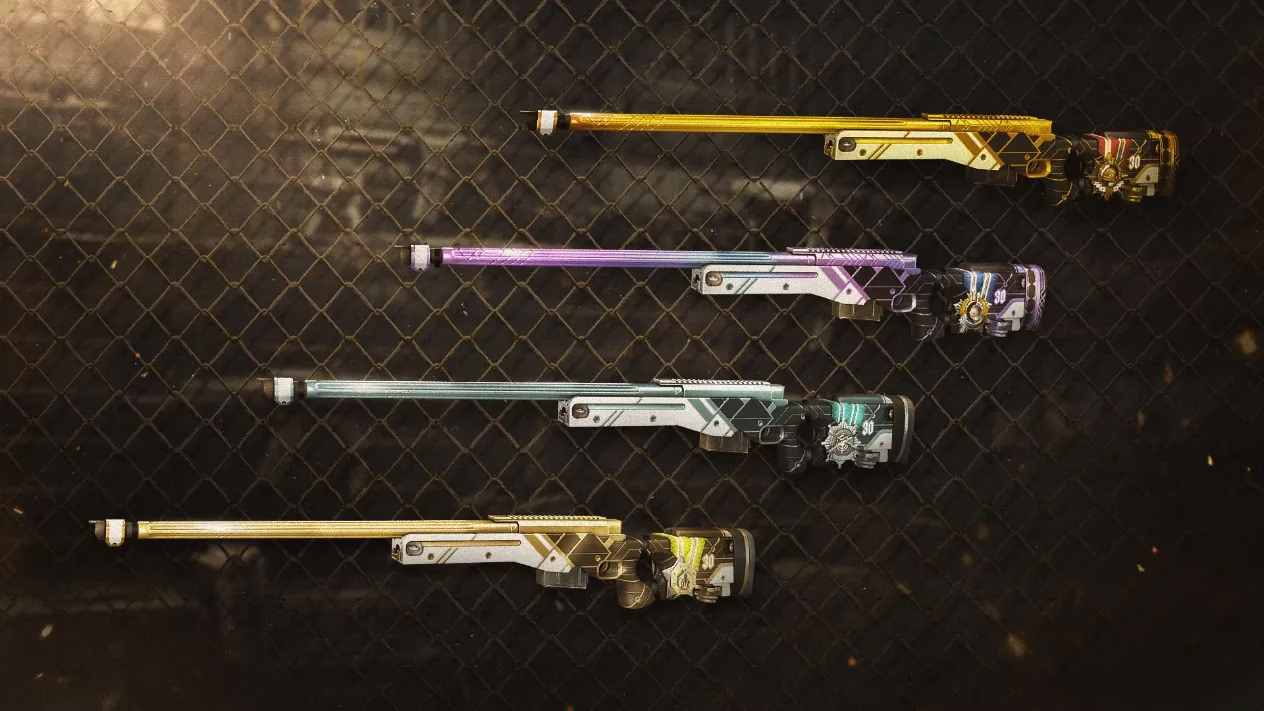
Tier Rewards received a noticeable upgrade. In response to community feedback that the old rewards were not enough of an incentive, the developers added weapon skins as Tier Rewards starting with Season 30. These skins are only obtainable through Ranked, which makes them a clear badge of skill. Players at Gold tier and above can earn them, and each season now includes a preview of all Tier Rewards. That preview lets players set goals before the season even gets going.
The Top 500 Bonus Rewards also changed. Previously, those rewards were available to every Top 500 player. After Season 30, they became exclusive to players at Master tier and above. That adjustment gave the reward more weight. Instead of being a wide participation trophy, it became a genuine mark of prestige that only highly skilled players could show off.
Ranked Play Points Make Every Match Count
The Ranked Play Point Rewards operate differently from Tier Rewards. Players accumulate points through Ranked play, and the number of points earned depends on performance in each match. That means a player does not need to reach a high tier to feel rewarded. Consistent effort matters. A solid rotation, a smart engagement, or a well-timed survival play can all contribute to point gains, which encourages players of all skill levels to give their best in every match.
This system helps solve a common problem in competitive modes. Lower-tier players often stop trying once they feel they cannot reach the next rank. With Ranked Play Points, there is always a smaller goal within reach. That loop keeps matches active and gives casual competitors a reason to stay invested.
Tier Protection Lowers the Fear of Demotion
Ranked play in a battle royale can be punishing because survival sometimes depends on luck. A bad drop zone, an unexpected third-party fight, or an unlucky circle can undo the work of several good matches. The Tier Protection system was introduced to reduce that frustration. It prevents a player’s RP from dropping below the minimum required for their current tier, acting as a failsafe against immediate demotion.
That safety net makes it less intimidating to challenge a higher tier. Instead of worrying about one poor match wiping out progress, players can focus on consistent play. The developers wanted to keep the challenge intact while removing some of the unnecessary stress that made Ranked feel exhausting.
A comparison of the reward logic helps clarify the shift:
| System | How it works | Who benefits |
|---|---|---|
| Tier Rewards | Based on final skill tier | Competitive players aiming for prestige |
| Ranked Play Point Rewards | Earned by playing and performing in matches | Players of all skill levels |
| Tier Protection | Prevents immediate tier demotion | Players pushing into new tiers |
| Top 500 Bonus | Requires Master tier or above | Elite players seeking true prestige |
The RP system itself also went through changes. In early 2024, the developers piloted adjustments to how RP was calculated. While those changes were not included in the Season 30 update, the team analyzed two months of data and planned a refined rollout later in the year. The overall direction stayed the same: create an environment where players of similar skill compete against each other, while still allowing individual goals for every RP segment. The result is that RP acts as a performance metric, and tier becomes a more objective measure of skill.
Lowering the Barrier to Entry
A competitive mode needs a healthy player pool to support skill-based matchmaking. To help with that, the developers offered BATTLEGROUNDS Plus at a reduced price during Update 30.1. This was not treated as a typical sales event. The goal was to lower the barrier for legitimate players who wanted to try Ranked without immediately committing to the full upgrade cost.
That decision came with obvious concerns. BATTLEGROUNDS Plus also acts as a barrier against cheaters, so reducing its price could invite bad actors. The Survival Mastery Level requirement served as a deterrent, since most Basic accounts had not yet reached level 80. The developers also said they would look into stronger filtering and sanctions against illegal software during the discount period.
A Competitive Foundation That Still Holds Up
Looking at Ranked in 2026, the core ideas from that period still shape the experience. The mode remains tied to PUBG’s identity as a battle royale where looting, fighting, and surviving all matter. The connection between Normal Match, Ranked, and Esports has grown stronger, and the reward systems give players more reasons to move between those spaces. The development team has continued to listen to community feedback and refine the mode, but the promise has stayed the same: Ranked should be competitive at every tier, not just at the top.
For a player who wants a clear goal, Tier Rewards offer a target. For someone who wants consistent progress, Ranked Play Points provide a path. And for those who are afraid of losing their rank after one unlucky game, Tier Protection offers a second chance. That combination made Ranked more approachable without flattening its competitive edge.
Comments