So, I've been diving deep into the latest update from Krafton, and let me tell you, it's a game-changer—literally. As a regular player, I'm always looking for ways to make my gaming sessions more immersive and, frankly, less lonely when my usual squad isn't online. That's where these new AI companions, called Co-Playable Characters or CPCs, come in. Krafton, the minds behind PUBG and the new life-sim inZoi, teamed up with Nvidia to bring these buddies to life using something called the Avatar Cloud Engine (ACE). It’s not just another NPC following a script; this feels different from the start.
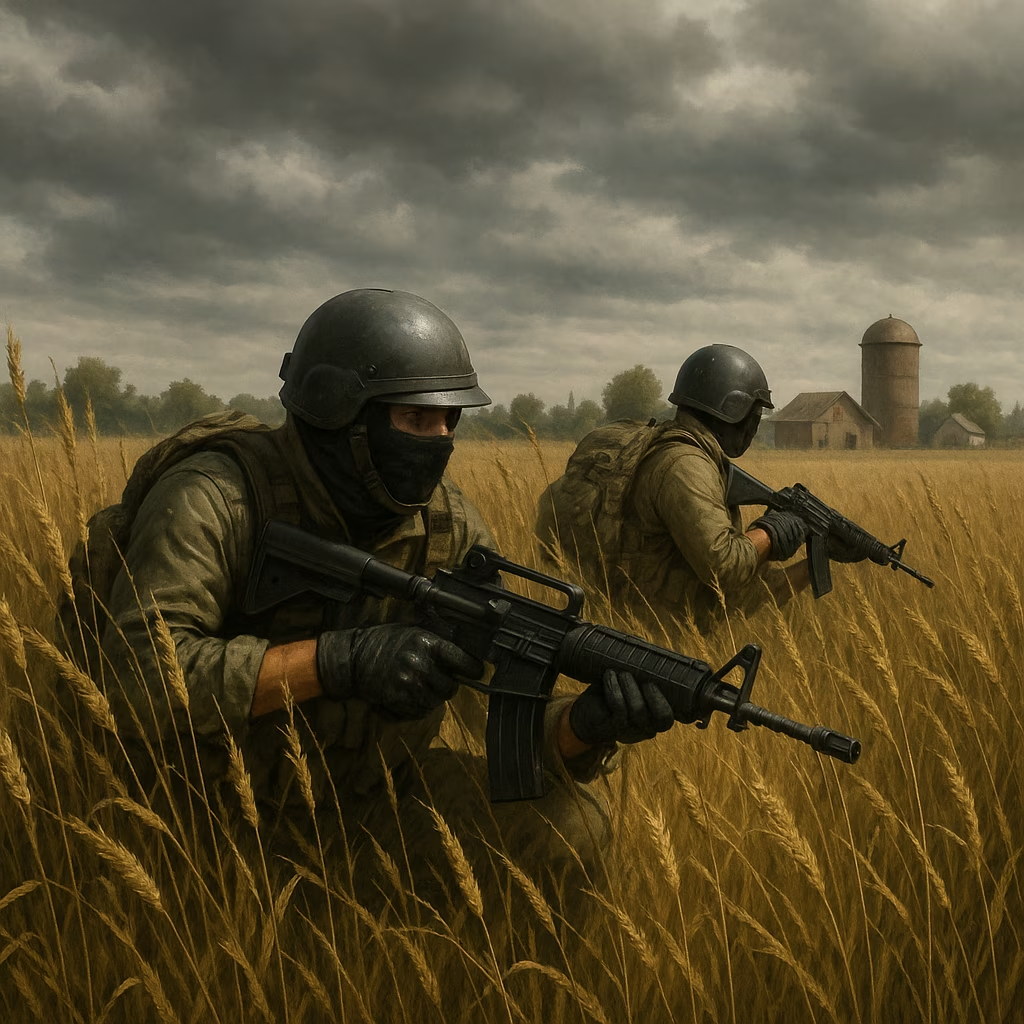
You know those traditional NPCs that just stand there or run on a loop? Forget them. These CPCs are built with a Small Language Model (SLM) that runs right on your device. Krafton says they "understand and respond to game situations in a human-like manner." And I have to agree—the first time I booted up PUBG and met my new "Ally," it was a bit surreal. I could actually talk to it. Using my microphone, I asked, "Hey, can you keep an eye out for a vest and some ammo?" And you know what? It did. My Ally found the gear, pinged the location, and even said, "Found a vest and ammo here," in a voice that, while slightly robotic, was clear and purposeful. It didn't stop there. Later, when we got into a firefight, I yelled, "Flank left!" and the Ally acknowledged with a "Moving to flank" and actually did it, communicating its actions back to me. After we won the skirmish, it even threw in a little "Nice work, team" banter. It’s not perfect—the speech can feel a bit stiff sometimes, like it's trying a little too hard to sound natural—but the core idea is incredible: replicating a human teammate through AI-driven conversation and strategy.
The real magic is in the coordination. I could strategize out loud. "Let's hold this building," or "Check that ridge for snipers." The Ally processes those commands using the SLM and acts on them. It spots enemies and calls them out, provides covering fire when told, and even finds vehicles. I asked once, "Is there a car nearby?" and it responded, "Affirmative. Found a vehicle. I will come to you." It’s this layer of verbal, cooperative play that transforms a solo session into something genuinely collaborative. For someone who plays a lot of battle royale, having a reliable, communicative partner—even an AI one—fundamentally alters the pace and tension of the game. You're not just commanding a bot; you're conversing with a teammate.
Now, let’s switch gears to inZoi, Krafton's answer to The Sims. This is where the AI takes on a completely different, but equally fascinating, role. Here, the citizens are called "Zois." Instead of being a teammate you direct, these Zois live their own digital lives. Powered by the same SLM technology, they operate based on what Krafton calls "free will and life experiences" in real-time. I spent hours just observing my neighborhood. Zois would develop unique reputations, follow the latest in-game fashion trends, and even spread gossip. I saw one Zoi start wearing a new hairstyle, and within a few in-game days, several others in the plaza had adopted it! They chat with each other, form relationships, and make choices that seem organic, not pre-programmed. It creates a living, breathing world that feels dynamic and unpredictable.
It's clear Krafton is betting big on AI. They set up their own Deep Learning Division back in 2022 and have been scooping up AI tech ever since. In a gaming landscape full of debates about AI ethics and its environmental cost, they're charging full speed ahead. And they're not alone. Think about it:
-
Microsoft is pouring resources into generative AI for its studios.
-
Electronic Arts (EA) is experimenting heavily with AI-driven content.
-
Ubisoft already showed off "Neo NPCs" last year—prototypes you can actually have conversations with in-game.
The industry-wide push is undeniable. For players like me, it means our games are getting smarter, more reactive, and more personal. Whether it's a tactical ally in PUBG or a bustling digital society in inZoi, AI is moving from a background tool to a core feature of interaction.
Of course, it makes you wonder about the future. If this is what 2026 looks like, what's next? Will my Ally in PUBG eventually learn my playstyle and suggest strategies? Will the Zois in inZoi remember my past interactions and hold grudges or form friendships? The potential is both exciting and a little daunting. The technology is still evolving—the occasional stilted dialogue reminds you it's AI—but the foundation is incredibly solid. For now, I'm just enjoying having a reliable squad mate who's always ready to drop in, and a virtual city that never sleeps, always buzzing with its own AI-powered drama. The line between playing a game and inhabiting a world is getting beautifully, fascinatingly blurry.
Insights are sourced from GamesRadar+, and they help frame why Krafton’s CPC approach in PUBG and emergent “Zoi” behavior in inZoi feels like more than a novelty: the industry is steadily shifting toward AI-driven interaction as a headline feature, where moment-to-moment gameplay is shaped by conversational command, reactive decision-making, and systems that can generate unpredictable social or tactical outcomes rather than repeating fixed NPC routines.
Comments