As I drop into the familiar, tension-filled landscape in 2026, the weight of my gear feels different. The perfect loadout in my hands is no longer a ticket to a frantic, desperate race against a merciless blue wall. Do you remember that old frustration? The sheer agony of finding yourself, after a tense looting phase, condemned to a mad dash across the map, your precious gear rendered almost meaningless by cruel circle RNG? That feeling of being a 'poor chump,' as the zones of old would dictate, is now a ghost of a memory I sometimes whisper about to newer players. The battlefield has evolved, and with it, the very soul of the fight.
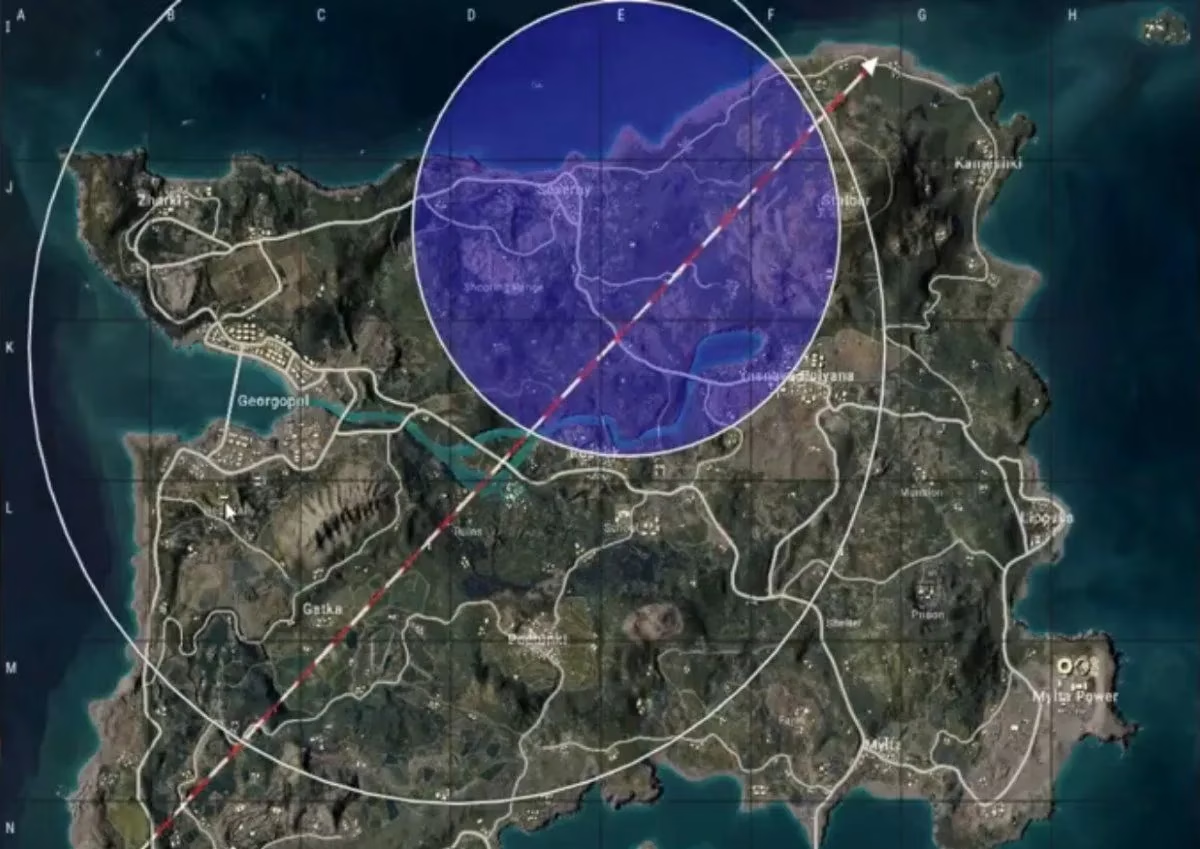
The catalyst for this change was a simple, beautiful, and brutal idea: the Bluehole Mode. Tested years ago, it wasn't just a new rule set; it was a philosophy woven into the game's code. The old, singular safe zone was a kingmaker of luck. Those blessed by the initial drop could simply nestle in the heart of the circle, building fortresses of patience and ambush. What is victory if it is gifted by chance rather than forged in combat? PUBG Corp asked this very question, and the answer reshaped our battlegrounds. The safe zone transformed, becoming a dynamic, living entity. An outer ring of punishing blue light still herded us, but now, at its center, a second, forbidden circle pulsed with equal menace. This inner sanctum was no sanctuary; it was a zone of exile, dealing damage identical to the outer wall. The play area became a shifting, predatory donut, constantly squeezing the arena of conflict.
This inner ring, this 'blue hole,' persisted with relentless purpose until the final, climactic moments of the match. Its presence banished passive camping from the lexicon of viable strategies. No longer could a player win by simply occupying the center and waiting for the world to come to them. The mode forced movement, engagement, and constant tactical reassessment. To compensate for the reduced 'safe' territory for looting, the world itself became more generous. Overall item spawn rates were boosted dramatically. Every building, every crate, held greater promise. The hunt for gear was condensed, making early-game skirmishes more frequent and intense. The statistical imbalance—where a lucky zone placement significantly predicted victory—was directly challenged. Were we not tired of battling the environment more than each other?
Playing in this evolved arena today feels like a pure test of skill. The poetry of the match is no longer in surviving the map's random wrath, but in the dance between players within a defined, fair stage. The early game is a symphony of controlled aggression and rapid looting. The mid-game becomes a strategic ballet of positioning along the edges of the ever-tightening ring, always mindful that the center is a trap. The final circles are crescendos of raw combat, where positioning is earned through foresight and firefights, not granted by an invisible dice roll.
Let me paint the scene of a typical match now:
-
Phase 1 (Drop & Initial Loot): The world is rich with possibility. A 50% increased spawn rate means decisions are swift. Do I contest this hot-drop for high-tier gear, or play the edges to gear up safely? The inner ring already glows on my map, a silent reminder that nowhere is permanently safe.
-
Phase 2 (The Squeeze Begins): The outer blue wall starts its march. My team and I are not just running from it; we are navigating the corridor between the two deadly rings. Encounters are inevitable and often occur in these pressurized channels. Flanking, holding angles, and managing heals become a complex, beautiful puzzle.
-
Phase 3 (The Final Act): The inner ring vanishes, but only when the battlefield has been whittled down to its most dedicated survivors. The final arena is small, but everyone here has earned their place through adaptation and combat prowess, not through finding a lucky bush in the first circle. The victory, when it comes, tastes sweeter, undiluted by the aftertaste of fortune's favor.
The legacy of the Bluehole Mode test is etched into PUBG's core identity. It asked a fundamental question about fairness in a genre built on chaos and answered it with elegant, ruthless game design. It transformed player behavior from the ground up. The 'camping meta' that once defined certain playstyles has been largely relegated to history. Today's strategies are dynamic, revolving around zone prediction, rotation timing, and proactive engagement.
As I look at the vibrant, competitive scene of 2026, I see a game that listened. It listened to the frustration of the player endlessly outrun by the blue, and to the silent guilt of the player who won by simply sitting still. By introducing a mechanic that actively punished passive centrality and rewarded active adaptation, PUBG didn't just add a mode; it reaffirmed a principle. In the grand, poetic narrative of the battle royale, shouldn't the final victor be the master of the dance, not merely the last one sitting in the chair when the music arbitrarily stops? The Bluehole concept ensured the music never stops for anyone until they are truly, definitively, outplayed. And in that constant, demanding rhythm, I found a purer, more profound version of the game I love.
Comments