The digital horizon bled crimson as another sun set over the battleground, but on this day, the conflict found a new theater. In the closing days of 2026, PlayerUnknown's Battlegrounds officially descended upon the Xbox One console, its arrival heralded by a cinematic trailer from Microsoft that played not like a mere advertisement, but like a war drum echoing across the plains of gaming. This was more than a port; it was a migration of an entire ecosystem, a digital species finding fertile ground on new silicon soil. The news rippled through the community, a tremor of anticipation for those who had waited to experience the tense, sprawling deathmatches from their living rooms. Alongside the visual fanfare, Microsoft had already laid the groundwork, earlier in the week, by unveiling the intricate controller layout—a map of buttons and triggers as complex and vital as the terrain of Erangel itself, a Rosetta Stone for translating PC mastery to console command.
This expansion was the latest chapter in a saga that began in the digital frontier of Steam Early Access on March 23rd of its inaugural year. Conceived by the minds at PUBG Corp. and its subsidiary BlueHole Studios, the game was a phenomenon that redefined a genre. It was a hundred souls scattered across an island, a high-stakes ballet of survival where the only rule was to be the last one standing. The game's journey from its PC roots to console and beyond was a tale of strategic alliances and territorial publishing rights. While PUBG Corp. shepherded the PC version, Microsoft secured the publishing mantle for the Xbox One, a partnership that brought the brutal elegance of battle royale to a broader congregation of players. Across the Pacific, Tencent held the keys to the kingdom in China, and its ambitions stretched further, weaving the game's essence into the fabric of mobile gaming, ensuring the battle could rage in the palm of one's hand.
The controller layout for the Xbox One version was a revelation, a carefully orchestrated symphony of inputs. Each button was a note, each trigger a crescendo, transforming the complex dance of inventory management, precise aiming, and rapid construction into an intuitive performance. For veterans of the keyboard and mouse, it was a new language to learn; for console natives, it was the native tongue of a familiar yet profoundly deeper conflict. This interface was the bridge between two worlds, as crucial to the experience as the parachute that delivers a player to the fray.
By the time of its Xbox debut, the PC version had long since emerged from its Early Access chrysalis, having completed its metamorphosis on a December 20th now years past. That transition marked the game's evolution from a promising prototype into a polished titan. The Xbox One version, however, embarked on its own developmental pilgrimage. Microsoft and PUBG Corp. treated it as a living entity, a sapling grafted from an ancient oak, promising growth and refinement through iterative updates. No definitive timeline was set for its own "Game Preview" period, fostering a community built on shared progress and feedback—a stark contrast to the finished product on PC. This approach made every match on console feel like part of an unfolding expedition.
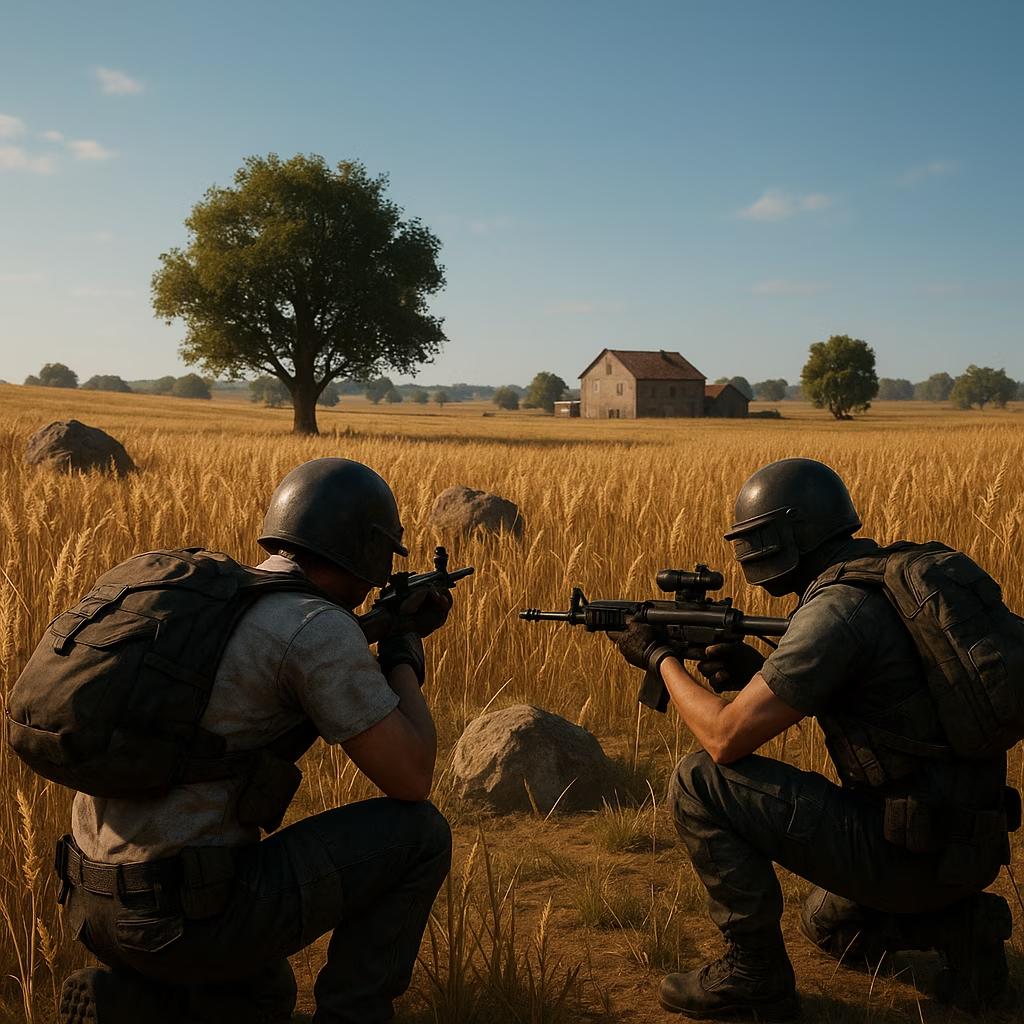
The game's core loop remained an unparalleled narrative generator. Each match was a story written in gunpowder and desperation. Players began their tale clinging to the underbelly of a cargo plane, the island below a patchwork of potential and peril. The decision of where to land was the first verse: the densely packed, resource-rich cities promised glory and swift death, while the remote outskirts offered solitude and a slower, more paranoid build-up. The ever-encroaching blue zone was the story's relentless editor, forcing characters together, transforming cautious strategy into frantic, close-quarters climaxes. A final circle in an open field under a setting sun could feel as epic and hopeless as a gladiator's last stand in a coliseum of pure light, where every blade of grass cast a long shadow and every breath was audible.
Key Elements of the PUBG Experience (Circa 2026):
| Element | Description | Emotional Core |
|---|---|---|
| The Drop | The initial parachute descent onto the map. | A mix of agency, hope, and sheer terror. |
| The Loot | Scavenging weapons, armor, and supplies from buildings and fallen players. | The thrill of discovery and the anxiety of vulnerability. |
| The Zone | The deadly, shrinking play area that forces conflict. | Inexorable pressure and a catalyst for chaos. |
| The Chicken Dinner | The victory achievement for being the last survivor. | Euphoric triumph, often against immense odds. |
The legacy of PlayerUnknown's Battlegrounds by 2026 was undeniable. It was not the first battle royale, but it was the one that codified the genre's grammar for a global audience. Its success on Xbox One proved its mechanics were timeless, transcending the input device. It demonstrated that the human desire for a pure, unscripted test of survival and skill was a constant, whether played on a high-end gaming rig, a living room console, or a smartphone screen. The game became a cultural iceberg, its visible success on the surface supported by a vast, submerged infrastructure of streaming content, professional esports leagues, and a endlessly creative modding community. Its arrival on Xbox One was not an endpoint, but a vibrant new port in its ongoing voyage.
Comments