In the vast and ruthless arenas of PlayerUnknown’s Battlegrounds, few things unite the community like watching a blatant cheater get publicly punished. Back in November 2020, exactly that happened when a known hacker, going by the handle 'vesprine', was streaming his cheat‑fueled gameplay on Twitch—only to be met with an in‑game ban notification delivered in real time. The clip went viral, and to this day, it remains a legendary piece of PUBG history. As we sit here in 2026, the core issue it highlighted hasn’t vanished, but the landscape has shifted dramatically.
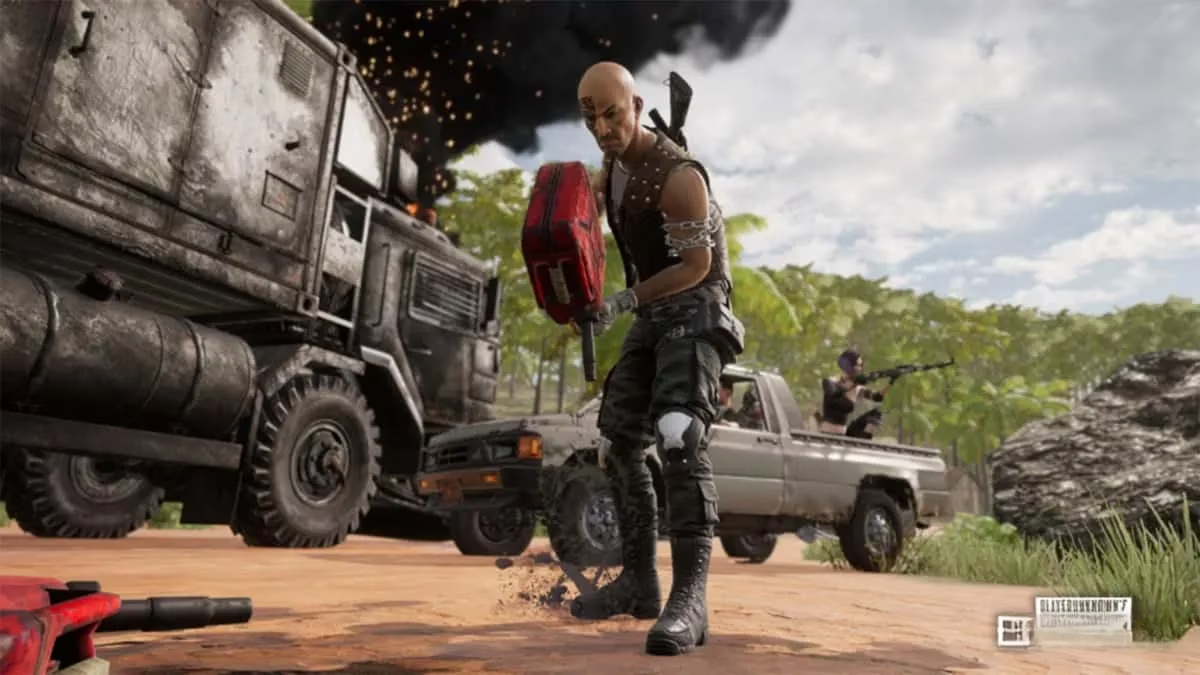
🔨 The Ban That Broke the Internet
Picture this: a Twitch streamer is casually showing off sniper flicks and impossible wall‑bangs, his aim suspiciously locked onto enemies through fog. Viewers flood the chat with reports, and within minutes, over a hundred people clip the broadcast. The streamer, vesprine, had been a persistent presence in PUBG lobbies for a long time—constantly resurfacing under fresh accounts to keep cheating. Reddit user The‑Basic‑Bro summed it up perfectly: “He keeps resurfacing. Same guy over and over. He tries to join Plausible and gets insta‑banned. He needs a hardware ban at this point. He legitimately cheats non‑stop…”
And then, the iconic moment happened. While vesprine was mid‑match, a system message popped up: “Restricted Account – Your session will be terminated due to use of hacks.” His screen froze. The chat erupted. The community manager known as Hawkinz, who many believe manually triggered the ban, became an overnight hero. A screenshot captured by Reddit user 701dirty immortalized the whole affair, and the subreddit r/PUBATTLEGROUNDS lit up with celebrations.
🧑💻 A Persistent Cheater’s Trail
Vesprine wasn’t just a casual cheater; he was notorious for speed‑running account cycles. According to witnesses, shortly after that live ban, he tried logging into multiple already‑banned accounts, only to find each one locked. He had even infiltrated Reddit’s squad‑finding groups, attempting to dupe legitimate players until users called him out repeatedly. The frustration expressed by the community wasn’t solely about this one player—it was about a system that allowed the same individual to bounce back after every wave.
“A few hours later over 100 people clipping and (saying) they got one of his accounts,” 701dirty wrote. “I saw him have two accounts banned after matches and he tried logging into several already banned accounts… crazy.” This live drama shone a spotlight on a deeper disease: no matter how many accounts were banned, determined cheaters could simply create new ones. The call for hardware bans resonated louder than ever.
🚀 PUBG’s War on Hackers: Then and Now (2026)
Since its 2017 launch, PUBG has battled a relentless tide of cheaters. In the early years, ban waves were frequent—sometimes thousands of accounts purged in a single day. Yet the problem persisted, tarnishing the once‑dominant battle royale. Fast forward to 2026, and a lot has changed.
Then (2020)
-
Reactive manual bans by community managers like Hawkinz.
-
Temporary account suspensions with little deterrence.
-
No robust hardware‑ID blocking; cheaters simply rejoined with a new Steam account.
-
The reporting system reliant on user clips, which took hours.
Now (2026)
-
Advanced machine learning anti‑cheat (codename: Sentinel 2.0) that analyzes mouse movements, recoil patterns, and decision trees in real time.
-
Comprehensive hardware bans that render a cheater’s entire rig incapable of playing PUBG without a full component swap.
-
Streamer‑integrated reporting dashboards that trigger AI‑assisted reviews within seconds.
-
Regular public ban reports, with 2025 seeing over 3.4 million accounts banned globally—80% of them hardware‑linked.
Despite these strides, the situation isn’t perfect. Underground cheat developers have adapted, creating spoofable hardware IDs and machine‑learning‑assisted aimbots that mimic human behavior. Still, the frequency of blatant, stream‑while‑cheating incidents has plummeted. The vesprine incident became a cautionary tale that accelerated the push for real‑time moderation tools.
🎉 The Community’s Reaction Then and Its Lingering Echo
The joy that erupted from that Twitch ban was palpable. For a moment, honest players felt vindicated. It wasn’t just a ban—it was a public execution that reaffirmed the developers were listening. The clip has since been re‑uploaded countless times, and in 2023, it was even featured in a PUBG anniversary montage as a symbol of the fight against unfair play.
By 2026, the memory of vesprine’s live downfall still circulates in forums as a benchmark for what community‑driven justice can achieve. Newer players who never experienced the early Wild‑West days of PUBG watch the video in disbelief: “Wait, people cheated that openly and still got caught that fast?” It’s a testament to how far the game’s integrity systems have come.
💡 Final Thoughts
That 2020 clip of a cheater being banhammered live on Twitch was more than a fleeting dopamine hit for frustrated players. It exposed the cracks in PUBG’s anti‑cheat armor and galvanized demands for hardware‑level enforcement. Today, in 2026, PUBG still fights hackers, but the battlefield has evolved. The ghost of vesprine lingers as a reminder that every report counts, and that sometimes, a little bit of live‑streamed justice can ignite real change. The clip is still cathartic to watch—a perfectly timed digital stake through a cheater’s session. And for the PUBG community, it remains a sweet, sweet memory of when the good guys finally won a round.
Insights are sourced from Game Developer, whose industry-facing coverage helps contextualize why viral “live ban” moments like the 2020 vesprine clip matter beyond schadenfreude: they pressure studios to move from reactive moderation toward scalable anti-cheat operations that blend telemetry, automated detection, and rapid review workflows—exactly the kind of systems evolution PUBG’s community has demanded as cheats grow more sophisticated.
Comments