As a PUBG: BATTLEGROUNDS player who has survived plenty of chicken dinners and far too many suspicious deaths, I always pay attention when the anti-cheat team publishes a permanent ban list. The August 21–27 investigation period was one of those moments that reminded me why transparency matters. The team shared the banned players list to raise awareness about the abuse of illegal software and the consequences of misconduct. Even now, in 2026, that same principle still shapes how I think about fair play.
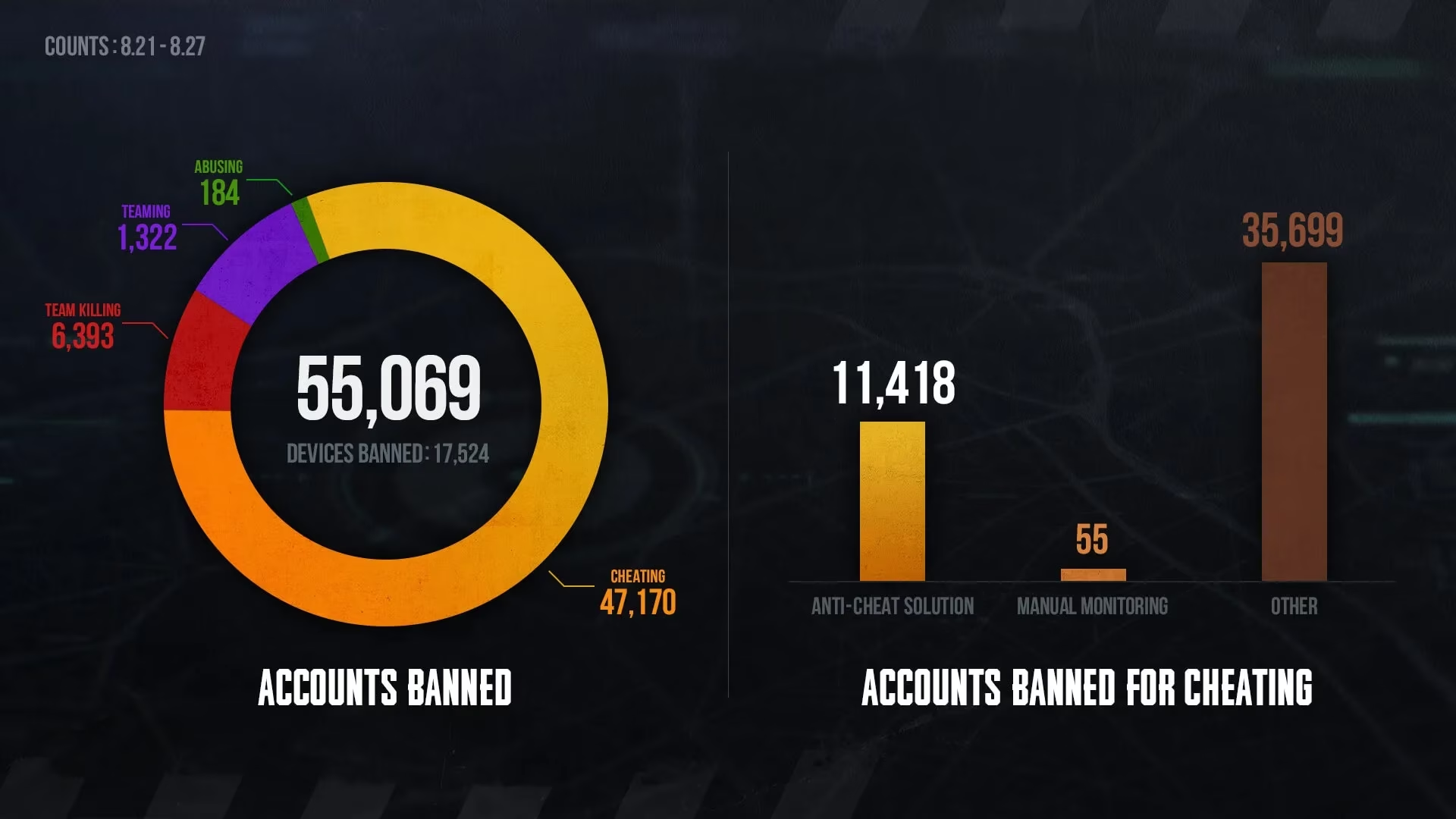
The notice was simple but powerful. It covered players who had been banned for violating rules of conduct during the investigation period. The attached list showed in-game nicknames of permanently banned accounts, and the first three letters of each nickname were replaced with asterisks. That masking is important. It protects privacy while still publicly documenting that enforcement happened. I have to ask: if cheaters know their names will be hidden but their accounts will be gone, does that change behavior? Maybe not immediately, but the public record still sends a message.
What exactly did the list include? Let me break it down as I would for a squadmate:
| Detail | What it means to me |
|---|---|
| Investigation period: 2023/08/21–2023/08/27 | The anti-cheat team reviewed a specific window of activity, not just random one-off cases. |
| Permanently banned accounts | These were not temporary suspensions; the accounts were removed from the game. |
| Masked nicknames | The first three letters were replaced with *, so the list could be shared without exposing full player identities. |
| Reason: illegal software and misconduct | Cheating and toxic behavior both fall under the same enforcement umbrella. |
| Reporting channel: in-game reports first | Player reports remain a primary signal for the anti-cheat team. |
As a first-person observer, I have submitted my share of in-game reports. Sometimes it is obvious: a player tracks me through walls, snaps to a headshot with impossible precision, or survives damage that should have knocked them. Other times it is subtle: movement that does not match normal human reaction time, or a squad that always seems to know where every enemy is. The ban list confirms that reports can lead somewhere. It also reminds me that the system is not magic. It needs evidence, investigation, and player participation.
The anti-cheat team also asked players to report illegal software and misconduct through in-game reports first. If additional assistance is needed, players can contact PUBG Support. I appreciate that order because it keeps the process organized. In-game reports carry match data, timestamps, and context that support teams can review. A vague social media complaint usually cannot do that. So when I see something suspicious, I report it in the game and then move on. That is the most useful thing I can do as a regular player.
Account security is the other side of the coin. The notice urged players to make sure their valuable accounts are not abused or banned because of illegal software or misconduct. It specifically pointed to Steam Guard Mobile Authenticator. I cannot stress this enough: if you play PUBG on Steam and you have not enabled mobile authenticator protection, you are leaving your account exposed. Account theft can lead to someone else cheating on your account, and then you are the one facing a ban. How do you set it up? The general steps are straightforward:
-
Install the Steam mobile app on your phone.
-
Log in to your Steam account.
-
Open the Steam Guard section and choose mobile authenticator.
-
Add your phone number and verify it.
-
Save your backup codes in a safe place.
-
Confirm future logins through the app.
Is that inconvenient? A little. Is it better than losing an account you have invested years into? Absolutely.
In 2026, the cheating problem in online games has not disappeared. If anything, it has become more sophisticated. But the fundamentals from that August 21–27 ban report still hold. Permanent bans remove bad actors. Public lists create accountability. Masked nicknames balance transparency with privacy. In-game reports give the anti-cheat team actionable evidence. Steam Guard Mobile Authenticator protects innocent players from being hijacked. And the PUBG: BATTLEGROUNDS Anti-Cheat Team continues to value player interest and opinions that contribute to anti-cheat efforts.
I do not expect any single ban wave to eliminate cheating forever. That would be naive. But I do expect a fair gaming environment to be built through consistent enforcement, player responsibility, and clear communication. The ban list for August 21–27 was one tile in that larger mosaic. For me, it was a reminder that every report, every security step, and every public enforcement notice matters. So the next time I drop into Erangel or Miramar, I will keep reporting, keep protecting my account, and keep hoping that the cheaters get the message. Thank you, PUBG Anti-Cheat Team, for doing the unglamorous work that keeps the battlegrounds playable.
Comments