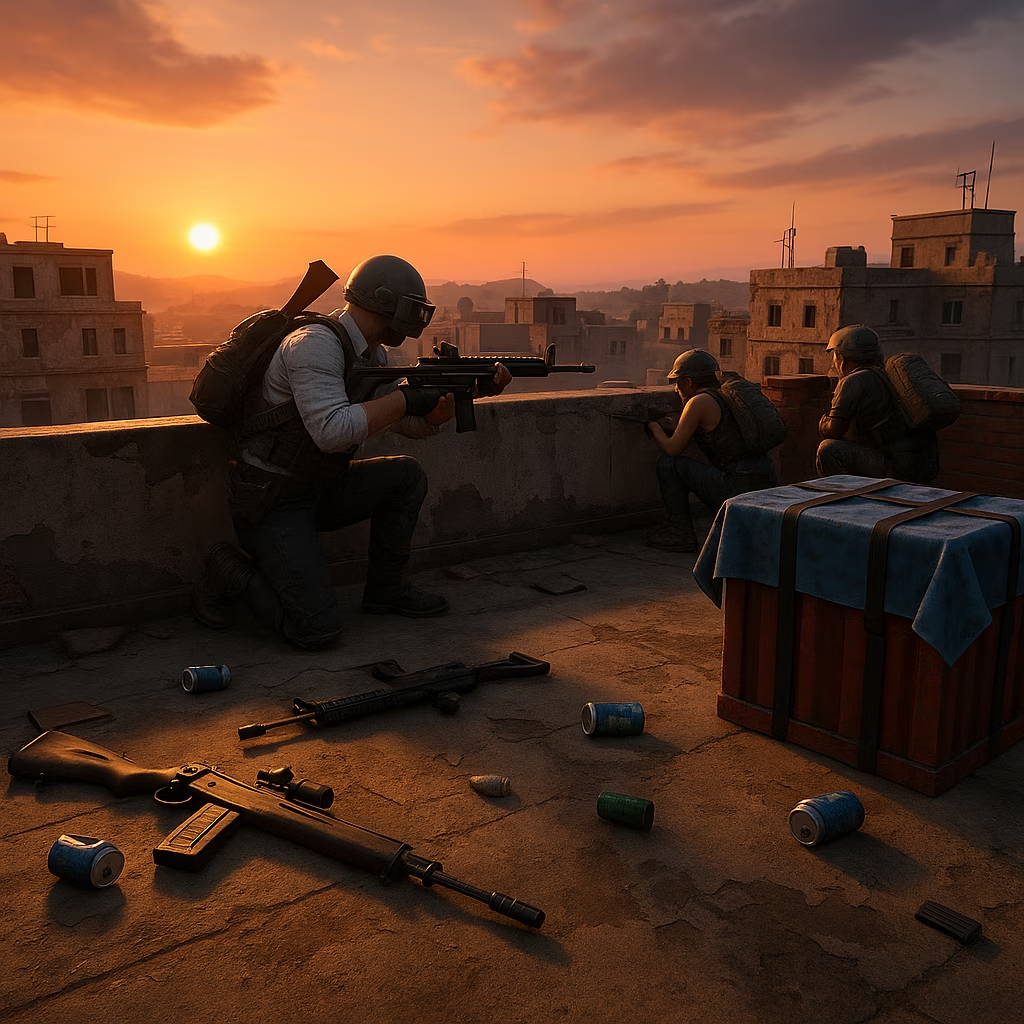
Looking back from 2026, it's almost surreal to recall the humble beginnings of PlayerUnknown's Battlegrounds. Just three months after its initial Early Access launch, the game had already sold an astonishing 4 million copies, a milestone announced by the creator himself, Brendan "PlayerUnknown" Greene. That early momentum wasn't just a flash in the pan—it was the first tremor of an earthquake that would reshape the entire gaming landscape. As a journalist who has followed this journey from those early days, I've witnessed a transformation unlike any other in interactive entertainment. The game's arrival on Xbox One later that same year was merely the opening act of a global conquest.
The Unstoppable Sales Momentum
The numbers told a story of undeniable appeal. Hitting 2 million copies by early May, then doubling that figure in just a matter of months, demonstrated a velocity of adoption that left industry veterans stunned. This wasn't just another Early Access success story—this was a cultural phenomenon in the making. What began as a novel battle royale concept quickly evolved into a full-blown movement, with players flocking to its tense, survival-focused gameplay. The development team at PUBG Corporation maintained a relentless update schedule, responding to community feedback while expanding the game's possibilities at a pace that kept players constantly engaged.
Evolution Through Content and Community
Regular updates became the lifeblood of PUBG's growth. The team didn't just fix bugs and optimize performance—they actively expanded the gameplay experience. Remember the excitement surrounding the promised PvP zombie attack mode? That was just the beginning of what would become a constantly evolving roster of gameplay variations. From the original Erangel map to the diverse battlegrounds that followed, each addition brought new strategic dimensions. The IGN review that awarded the Early Access version a tentative 9.0 proved prophetic in its assessment: despite rough edges, the core experience was "absolutely worth playing right now." This immediate playability, combined with long-term potential, created a perfect storm of player retention and word-of-mouth promotion.
The Human Element: Stress, Sofas, and Shared Experiences
Joe Skrebels, IGN's UK News Editor, perfectly captured the game's emotional impact when he noted that Battlegrounds made him "the most stressed he's ever been about where a sofa was placed in a room." This seemingly trivial observation revealed the game's genius: it transformed ordinary environmental elements into matters of life and digital death. Every piece of cover, every sightline, every abandoned building became charged with tension. This attention to tactical detail created stories—personal narratives of narrow escapes, perfectly timed shots, and heartbreaking near-victories that players carried with them long after closing the game. It wasn't just about winning; it was about surviving, outsmarting, and occasionally, about that perfectly placed sofa that meant the difference between a chicken dinner and an early trip back to the lobby.
The Ripple Effect Across Gaming
From my perspective in 2026, PUBG's early success created waves that are still felt today. The battle royale genre it helped popularize has become a cornerstone of modern gaming, but PUBG's particular formula—that blend of realistic ballistics, deliberate pacing, and high-stakes tension—maintained a distinctive identity. While other games chased faster paces and more fantastical elements, PUBG carved out its niche as the thinking player's battle royale. The commitment to regular updates established a new standard for Early Access development, proving that transparency and consistent communication could build not just a player base, but a dedicated community. The Xbox One release later that year wasn't a port; it was an expansion, bringing the tense, tactical combat to a new audience and proving the game's mechanics were compelling regardless of input device.
Legacy of a Phenomenon
Reflecting on those first 4 million copies sold, we can now see them as the foundation stones of an empire. The game that had journalists stressed about virtual furniture placement had tapped into something fundamental about competitive play: the thrill of high stakes in a believable environment. The "rough around the edges" quality noted in early reviews became part of the charm, a reminder of the game's indie spirit even as it grew into a behemoth. The promised content updates delivered and then some, with new maps, weapons, and modes arriving with a regularity that kept the meta-game fresh and the community buzzing. In an industry where hype often outpaces delivery, PUBG's Early Access period was a masterclass in under-promising and over-delivering, building trust through action rather than marketing. As we look at today's gaming landscape, filled with titles that learned from PUBG's successes and missteps, its legacy is clear: it proved that a dedicated team with a compelling vision could start small, listen to their community, and build something that would capture the world's imagination, one tense, sofa-filled firefight at a time.
Comments