Yo, what's up, fellow survivors? It's your boy, back at it again, diving deep into the ever-evolving world of PUBG. Even now, in 2026, the legacy of that first heart-pounding chicken dinner still hits hard. But let's be real, the journey hasn't been all smooth sailing. Remember the early days? The hype was like a rocket ship, but the game itself sometimes felt like it was held together with duct tape and dreams. Fast forward to today, and PUBG Corp is still in the trenches, fighting the same old battles: making the game run like a dream and keeping the cheaters at bay. It's a saga of promises, patches, and player patience.
🎯 The Triple-Threat Focus: Performance, Cheats, and Servers
PUBG Corp finally put their cards on the table, admitting straight up: "We've fallen short." No sugar-coating. They pinpointed three main pain points they're laser-focused on:
-
Performance & Optimization
-
The Eternal Cheating Plague
-
Server-Side Stability
This was a big move toward transparency. For years, players felt updates were as predictable as finding a level 3 helmet in a shack—rare and miraculous. New maps like Sanhok were cool, but if the game stuttered every time you peeked a corner, what was the point?
🖥️ The FPS Rollercoaster: A Performance Saga
Man, the frame-rate struggles in PUBG were legendary. One patch you're buttery smooth, the next, your game is chugging along like a tractor trying to win a Formula 1 race. Players reported brutal drops, especially after updates. PUBG Corp identified GPU overloading as a prime suspect—imagine your graphics card trying to solve a calculus problem while being juggled by a clown. That was the vibe.
Their fix? Changing the update pipeline. Instead of waiting for mega-patches, they started pushing smaller, live-server tweaks first. The goal: smoother, more frequent tuning instead of earth-shattering, bug-introducing overhauls. It's like maintaining a classic car; constant tinkering is better than waiting for the engine to blow up before you fix it.

🚫 War on Cheaters: From Banwaves to Courtrooms
If performance issues were a headache, cheaters were a full-blown migraine. PUBG Corp called this the area of "most progress," and they weren't kidding. Their approach became a multi-pronged spear:
-
The Ban Hammer: Massive, sweeping banwaves became a regular event. Goodbye, thousands of accounts!
-
Tech Warfare: They deployed "encryption-based solutions"—fancy talk for making it harder for cheat programs to even see the game data.
-
Legal Nukes: This was the big one. They didn't just ban; they sued. Remember when 15 cheat makers got arrested? Facing over $5 million in fines? That sent a shockwave. PUBG Corp went after the source, treating cheat developers like organized crime syndicates poisoning the well.
But this war came at a cost. The devs admitted that fighting cheats slowed down new content. Rolling out a huge anti-cheat update was like performing open-heart surgery on the game while it was still running—sometimes it caused more problems (crashes, failed launches) and had to be rolled back. It's a constant, draining arms race.
🔮 The State of PUBG in 2026: A Work in Progress
So, where are we now? Is PUBG the perfectly optimized, cheat-free paradise we dreamed of? Honestly? Not quite. It can be disappointing that these core issues still demand attention. The game's stability sometimes feels as fragile as a house of cards in a breeze.
Yet, there's hope. The increased transparency is a game-changer. Knowing what they're working on and why things break builds understanding. The community isn't just left in the dark, wondering if the devs have abandoned ship.
The Takeaway? PUBG's story is one of endurance. It's a live-service game that's had to rebuild its engine mid-flight. The commitment to tackling performance and cheating head-on, even when it means delaying shiny new guns or maps, shows a focus on the game's long-term health. It's not always pretty, but they're still in the fight. For every player frustrated by a lag spike, there's another appreciating a fairer firefight. The battle for the Battlegrounds continues, one update at a time.
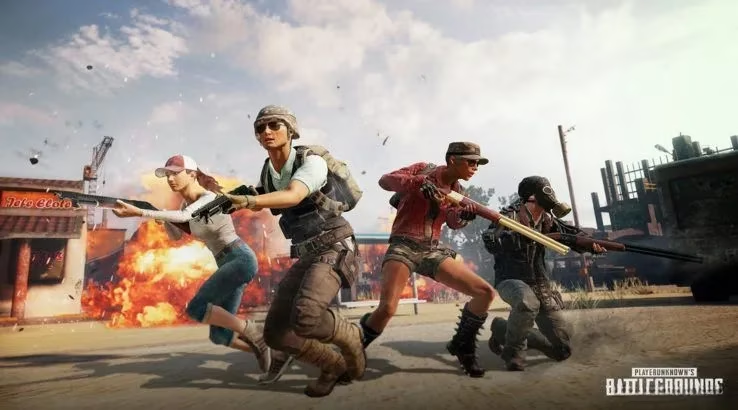
Data referenced from Game Informer helps frame why PUBG’s 2026 “triple-threat” grind—performance tuning, anti-cheat escalation, and server stability—still defines the day-to-day experience more than flashy new content. In a live-service shooter, each patch can shift the balance between smoother frame times and unintended regressions, and that same constant change also opens (and closes) windows for exploiters—making PUBG’s move toward smaller, iterative fixes and sustained anti-cheat pressure feel less like a one-time overhaul and more like permanent maintenance.
Comments