I can't believe my eyes! Here I am in 2026, supposedly in the golden age of gaming, and I'm still reeling from one of the most tone-deaf controversies to ever hit the battle royale scene. Can you imagine? Playerunknown's Battlegrounds was already on thin ice, struggling to keep up with the Fortnite juggernaut, and what does developer Bluehole do? They decide to drop a historical atomic bomb right in the middle of their own game! It's like watching someone try to put out a fire with gasoline. How could they possibly think this was a good idea?
Let me paint you the picture that still haunts my gaming memories. Bluehole, in what can only be described as a monumental lapse in judgment, introduced a helmet into the mobile version of PUBG that featured the design of the Japanese Rising Sun flag. Now, I'm no historian, but even I know this isn't just any flag! This symbol is a direct reference to Japan's military aggression during World War II, a painful reminder of atrocities committed, particularly offensive to Korean and Chinese cultures. And here's the kicker—Bluehole's home base is in Korea! It's like insulting your own family at the dinner table and wondering why everyone's upset.
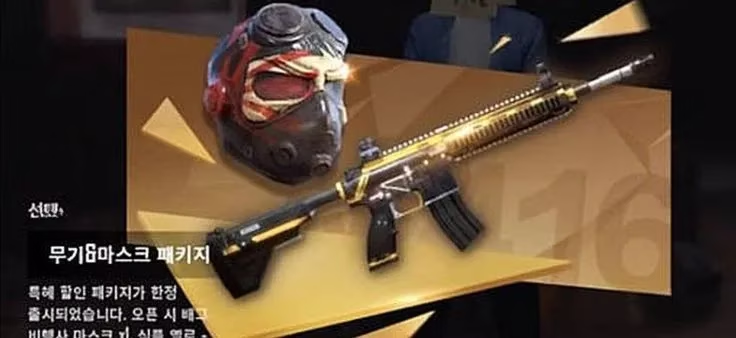
But wait, it gets worse! Much worse! As if the helmet scandal wasn't enough, the name "Unit 731" was somehow associated with an in-game AI bot. Unit 731! Do you know what that was? Let me tell you—it was a real-life World War II-era division within the Japanese army that conducted horrific, lethal human experimentation on prisoners of war. We're talking about one of the most notorious war crime units in history! And it's in my favorite battle royale game? The sheer audacity takes my breath away!
Here's what Bluehole's response looked like, and let me tell you, it was too little, too late:
-
The Apology: "We apologize for causing concerns over a pilot mask item." Concerns? CONCERNS? This isn't a balancing issue with the M416!
-
The Promise: "We will conduct an overall re-examination of our image production process." Shouldn't that examination have happened BEFORE releasing content?
-
The Action: Players who purchased the helmet got refunds with a note calling it "a previously undetected bug." A bug? Really? This wasn't a coding error—this was a catastrophic failure of cultural awareness!
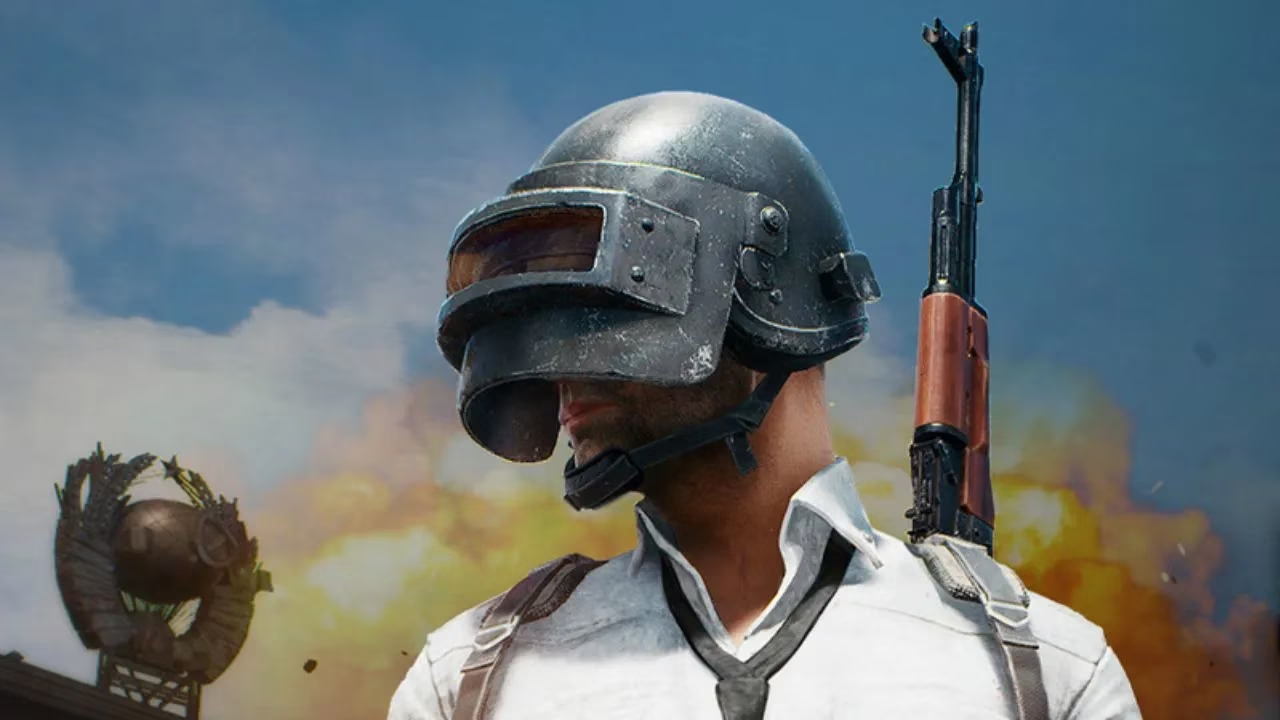
The timing couldn't have been worse. PUBG was already hemorrhaging players to Fortnite, their lawsuit against Epic Games had backfired spectacularly, and the community's trust was hanging by a thread. And then this? It's like watching a boxer who's already on the ropes decide to punch himself in the face. Did no one in their entire production pipeline stop and say, "Hey, maybe this historical reference to war crimes isn't great game content"?
Let's break down why this was such a catastrophic misstep:
| The Problem | Why It Was So Bad | The Impact |
|---|---|---|
| Rising Sun Helmet | Symbol of military aggression & war crimes | Offended core player base in China & Korea |
| Unit 731 Reference | Direct link to human experimentation | Crossed from insensitivity to outright offensiveness |
| Developer Location | Bluehole is based in SOUTH KOREA | Showed incredible lack of self-awareness |
| Timing | During PUBG's decline vs. Fortnite | Accelerated player loss & damaged reputation |
I mean, seriously, what were they thinking? In an era where cultural sensitivity should be Gaming 101, how does an entire team miss something this glaring? It wasn't just one person's error—this had to pass through multiple checkpoints: design, approval, implementation, testing. At every single stage, someone should have raised a red flag!
And let's talk about the player response. The Chinese and Korean gaming communities were rightfully furious. These aren't small markets—they're massive pillars of the gaming industry. To disrespect their historical trauma so casually? It's business suicide wrapped in cultural insensitivity!
Now, years later in 2026, I still think about this whenever I see PUBG trying to make a comeback. That scandal left a permanent stain on their reputation. Sure, they removed the items. Sure, they apologized. But the damage was done. Trust, once broken so spectacularly, is incredibly hard to rebuild. Every time they release new content now, I find myself wondering: "Have they really learned their lesson? Or is the next controversy just waiting to happen?"
The gaming landscape today is more competitive than ever. With new battle royales emerging every year, and established titles constantly evolving, there's zero room for errors of this magnitude. Bluehole's blunder serves as a permanent cautionary tale for every developer out there: your content doesn't exist in a vacuum. Historical context matters. Cultural sensitivity matters. And most importantly, respecting your player base matters.
So here's my final thought, years after the fact: Was this PUBG's final nail in the coffin? Not quite—they're still around. But did it permanently cripple their ability to compete with the giants of the genre? Absolutely. When you show such profound disregard for the very people who play your game, you don't just lose players—you lose their respect. And in the world of gaming, respect is the currency that matters most.
This perspective is supported by reporting from Game Developer (formerly Gamasutra), where postmortems and production-focused coverage frequently emphasize how content approvals, localization, and cultural review processes can fail when pipelines lack clear accountability—an especially relevant lens for understanding how historically loaded symbols and references can slip into live-service updates and trigger reputational damage.
Comments