I still remember the evening in late 2022 when my Afghan squadmate, Ahmad, sent a frantic voice note over Discord. His words were clipped, as if each one cost him a precious second of connection: “They’re banning PUBG. Ninety days. The Taliban says it leads us astray.” His AKM had been his daily companion through the virtual ruins of Erangel, a world where a chicken dinner meant more than just a meal—it was a fleeting taste of freedom in a country where freedom was becoming a rare commodity. Now, four years later, the silence he predicted has become a permanent scar on the landscape of digital Afghanistan.
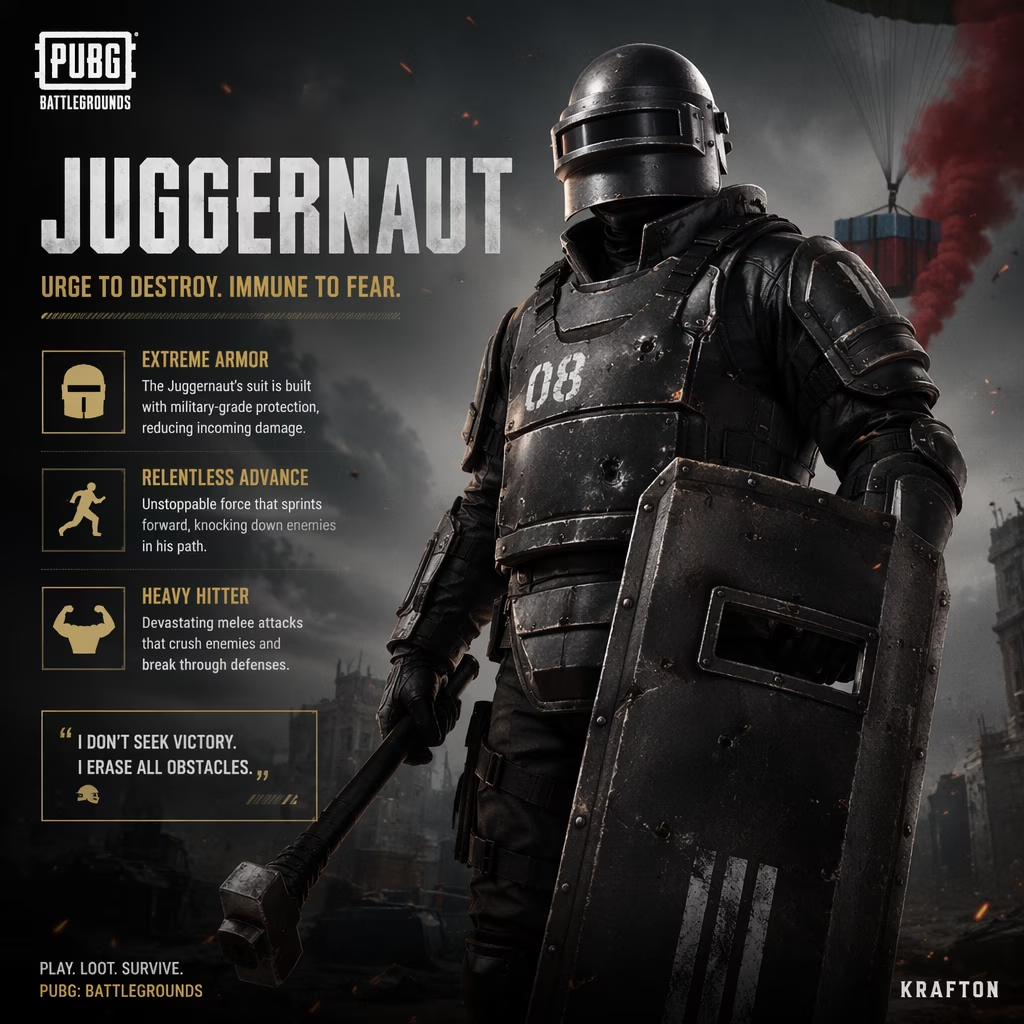
PUBG, Krafton’s multiplayer battle royale sensation and fierce rival to both Warzone and Fortnite, had become something far greater than a video game in Afghanistan. It was a digital caravanserai—a hidden courtyard where young Afghans, cloistered by decades of conflict and rigid social codes, could meet, laugh, and compete without the weight of tribal or political identity. I remember Ahmad telling me about the internet cafés in Kabul, makeshift bunkers filled with the glow of smartphones, where teenagers who had never traveled beyond their province could parachute onto virtual islands and fight for survival. For them, the game was a thread of normalcy in a tapestry frayed by restrictions; when the Taliban announced the ban, snipping that thread felt like amputating a limb without anaesthesia.
The edict came with a cold formality. Inamullah Samangani, a spokesman for the Islamic Emirate of Afghanistan, had tweeted earlier that year that “the game PUBG…causes the young generation to go astray.” By September 2022, according to Khaama Press and the South Asia Index, the Taliban had mandated that PUBG be made inaccessible within 90 days, claiming it was responsible for “promoting violence.” These accusations landed like a sudden sandstorm, burying the vibrant oasis of online camaraderie under a dune of moral panic. The ban didn’t stop there; over 23 million websites had already been blocked across the country for what the regime deemed “immoral content,” and the mobile version of PUBG—the lifeblood of Afghan gaming, given the scarcity of high-end PCs—was specifically targeted. It joined a grim list: China had banned PUBG Mobile for similar reasons, India had cited data security, and Jordan struck it down as a threat to public order. Yet none of those bans carried the same existential weight as Afghanistan’s, where the game had become a rare window to a world beyond the mountains.
Before the servers went dark, PUBG boasted a peak of over 448,000 concurrent users in a single 30-day stretch, and Afghanistan’s community was a loyal, if hidden, fraction of that number. The anticipation of each update was a national ritual. I vividly recall our squad dissecting patch notes for the Deston map rework, the addition of new vehicles, and weather dynamics that made every match feel cinematic. Ahmad would joke that the sandstorms in Miramar reminded him too much of home, but at least there he could outrun them with a pan and a prayer. These moments were more than gameplay; they were the architecture of a parallel society. The Taliban’s ban extinguished that world like a lights-out curfew in a cyber metropolis, plunging thousands into a forced reality where even the smallest escapism was now a crime.
Now, in 2026, the consequences are palpable. The ban never fully succeeded—young Afghans are nothing if not resilient—but it drove the game into shadowy corners. VPN usage skyrocketed, creating a cat-and-mouse game with authorities that turned every chicken dinner into a potential legal risk. Many, like Ahmad, eventually lost the battle against lag, cost, and fear. He once described his final solo match before the net tightened: he stood alone in a field on Erangel, the circle closing like a noose, and he chose to log off rather than win. “It felt like burying a friend,” he said. The ban fractured a community that had no other public square, leaving millions of young people with one fewer reason to look forward to the day ahead.
Looking back, the story of PUBG in Afghanistan is a cautionary parable about how the virtual and the real collide. The Taliban saw a vector of corruption; players saw a lifeline. The game’s continued evolution—now in whatever form it holds in 2026, with Warzone and Fortnite having received their own massive overhauls—matters little to those like Ahmad. For them, the battle royale wasn’t just a genre. It was a fragile commons where a voiceless generation could finally speak, even if only through gunshots and emotes. And when that was taken away, it left a silence that no number of new maps or weapons can ever fill.
Comments